Showing posts with label Information Librarian. Show all posts

Thursday, March 10, 2011

Interview with the Librarian at the SABC Newspaper Cutting Section

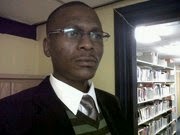
Themba Mtshali
SABC Newspaper Cutting Section
This is an interview as part of a series of blog posts to gain a better understanding of the SABC Media Libraries and what we do in the different sections that we belong to.

The interview this week is with Themba Mtshali, the Information Librarian who works in the Newspaper Cutting Section of the SABC Information Library.

This section has a collection of 3200 000 newspaper articles. The following newspapers are ordered for this section: Beeld, Sowetan, Business Day, Star, Citizen, Mail and Guardian, Rapport, Sunday Times, Sunday Independent, Sunday World and the City Press. Every day articles are scanned in on the Newbase System and then electronically get cut, pasted and indexed.

Themba, please tell us a little bit about yourself. (Where you grew up, where and what you studied and your work experience before you joined the SABC Information Library)

Answer: My name is Themba Mtshali. I was born in Soweto. I studied and passed my matric in KZN during the 1976 unrest. In 1981 I joined Standard Bank and worked as a Clerk. After that I worked at a NGO Company in Braamfontein as project coordinator for 5 years. In 1995 I joined the SABC as Desk Help Officer for late Dr Ivy Matsepe Cassaburi’s office. In 1996 I joined the SABC Media Libraries at the Cutting Service Section.

Please tell us about a normal day in your office. What newspaper articles do you give priority to?

Answer: My normal day in office starts with fetching newspapers from the security office at ground floor in the morning. I look through the papers for SABC articles to be scanned first and start scanning other newspapers thereafter. We give priority to current affairs news mostly form politics, sport, health etc. I also give attention to information requests that come to our office and cut, paste and index sports articles.

Tell us more about your collection and the scope of material you need to preserve in the library.

Answer: Our collection consists of newspaper articles that are scanned as well as newspaper articles that were cut and pasted and filed into files before we got the digital system. The focus is mostly on politics of the past and present government; SABC collections from when the SABC was established to present date. The newspaper collection is very vast and varied in its scope.

Do you struggle with technical difficulties, and if so, what?

Answer: Not much, but when we do have problems with our system server, we have BIT to assist us.

If you have an anecdote about a specific piece of interesting information, please share it with us.

Answer: As I am a sports fan, particularly soccer fan, I would like to preserve the history of soccer in South Africa.

Tell us why you enjoy doing the work that you do.

Answer: The job keeps me well informed about what’s happening around me.

Related posts:
Interview with the Librarian at the SABC Information Library: Newspaper Cutting Section
Interview with the Information Librarian at the SABC Information Library

Questions and post by Karen du Toit, Afrikaans Archivist in the SABC Radio Archives.


Friday, February 11, 2011

Interview with the Information Librarian at the SABC Information Library

Abel Thulare
SABC Information Librarian
The SABC Media Libraries consists of five sections, the SABC Information Library, the SABC Radio Archives, the SABC Record Library, the SABC Music Library and Audio Restoration. This is part of a series of posts of interviews to gain a better understanding of the work that we do. We work in silos and are not always aware what our colleagues are doing on a daily basis.

The interview is with Abel Thulare, an Information Librarian who works in the Newspaper Cutting Section of the SABC Information Library. He works very close with SABC Television and Radio journalists and producers in ensuring that they get the most up-to-date information about any requested topic that they are working on.

Please tell us a little bit about yourself. (Where you grew up, where and what you studied and your work experience before you joined the SABC Information Library)
Born in a small town called Sabie, in Mpumalanga Province. I moved to Tembisa at the age of two.  After completing my matric I studied B.Bibl. at the university of Pretoria which I completed (Former Rand Afrikaans University) now known as University of Johannesburg. I conducted my in-service training at the Kempton Park Public Library in 1998. In 2000 I worked as a Professional Library Assistant at St John’s College Library. I then went on to further my studies at Havatech-Pretoria where I studied IT (Programming) which I found very exciting & challenging. In 2002 I worked as a Junior Librarian at Africa Institute of South Africa (AISA). In 2004 I moved to the Council on Higher Education where I managed the Resource Centre. Between 2007 & 2008 I worked for two different companies Spar North Rand (Dry Goods Receiver/Checker) and ABI Midrand (Supervisor). I then moved to the SABC in June 2008 and to tell the truth I’m here to stay!
Well-well-well! I’m a good cook, baker and mechanic.

Please tell us about a normal day in your office. What material do you give priority to?
Scanning SABC Radio Bulletins dating back as far as the mid 1950’s.
Electronic cutting and pasting of current newspapers for preservation.
Providing efficient information to internal & external stakeholders as fast as lightning.
I sometimes man the book & magazine section if my colleagues are not around.
I try by all means to keep a balance of my chores.

Tell us more about your collection and the scope of material you need to preserve.
The Newspaper Cutting Section in the SABC Information Library has a collection of 3 200 000 newspaper articles. The following newspapers are ordered for this section: Beeld, Sowetan, Business Day, Star, Citizen, Mail and Guardian, Rapport, Sunday Times, Sunday Independent, Sunday World and the City Press. Every day articles are scanned in on the Newbase System and then electronically cut, pasted and indexed.
We select the articles which are newsworthy, broadcast related or important to keep for our heritage.

Do you struggle with technical difficulties, and if so, what?
Of course yes! First of all it’s our email. I always use more of it to send information requests to internal & external stake holders.

If you have an anecdote about a specific piece of interesting information, please share it with us.
“We will make sure the men in blue end up in orange if they commit crime” Gen Bheki Cele. That’s a good one for me.

Tell us why you enjoy doing the work that you do.
It keeps me busy and up to date with what is happening around us.

Questions and blog post by Karen du Toit, Afrikaans Archivist in the SABC Radio Archives

Friday, January 28, 2011

The Music Librarian – SABC Media Libraries

This is the third post of a series of posts of interviews with personnel in the SABC Media Libraries. I will be posing the same six questions to all of us.

We have five departments which fall under the SABC Media Libraries here at the South African Broadcasting Corporation. It is the SABC Music Library, the SABC Record Library, the SABC Information Library, the SABC Radio Archives and SABC Audio Restoration.

We work with different types of collections and different formats, and we are not always aware of what our colleagues are doing on a daily basis. This is a way of getting to know each other a little bit better with regards the work we do, and the importance of our collections in the broadcasting sector.
This interview is with Suzette Lombard, the Principal Music Librarian at the Music Library. The SABC Music Library has musical instruments of the highest quality, as well as printed music scores which they rent out to professional orchestras or music organizations on a daily basis.

  1. Please tell us a little bit about yourself. (Where you grew up, where and what you studied and your work experience before you joined the SABC Music Library)
I grew up in Pretoria. My grandmother was a music teacher and my mother sang part-time for PACT opera, so I was always surrounded by music. I started taking piano lessons when I was 7, and completed a BMus (Performing Arts) and Diploma in Individual Tuition at the University of Pretoria. I taught music in Pretoria and Port Shepstone for several years. Piano and flute were my instruments at university, but during those years there were very few music teachers on the South Coast and I ended up teaching organ, recorder and guitar as well! Very aware of my technical shortcomings on those instruments, I practised and studied as hard as the students, believing (as I still do)  that it was more important for those kids to develop a love for music than to become music virtuosi.

When moving back to Pretoria, I joined the SAPS Band where I played piano, flute and piccolo, regularly performing for heads-of-state and royalty. We did some interesting gigs like police parades and street marches country-wide, but were also lucky enough to perform in Bremen, Germany at the Musikschau der Nationen in 2001. I also played flute and piccolo for the Pro Musica orchestra in Roodepoort for a few years, and loved every minute of actually playing the operas and symphonies I’d grown up with. One of the nicest jobs I’ve ever had was teaching piano and flute at the American International School in Diepsloot, just before joining the SABC.

3. Tell us more about your collection and the scope of material you need to preserve.
As we earn a modest income for the SABC, we believe that service delivery is extremely important, therefore every single query and request we receive is a priority. In any normal day we could receive repertoire queries or requests for quotes, search the catalogue, advise clients on choices of scores and instruments, do the necessary paperwork and dispatch the orders. We rent out orchestral instruments such as timpani, snare drums, tubular bells and tam-tams as well as double basses and pianos. We have a collection of music scores including orchestral, vocal and choral scores and chamber music.
4. Please tell us about a normal day in your office. What material do you give priority to?
 
With the music scores, instruments and equipment going out regularly, there is always something that needs to be repaired or cleaned or fixed-up. Great care must be taken when moving or transporting the equipment, as most of the instruments are valuable and hard to replace. It is also difficult to have some instruments repaired or serviced, as the skills as well as parts needed are not always available in South Africa, which means that we have to source it from overseas.
3. Do you struggle with technical difficulties, and if so, what?
Some of our sheet music collection is very old and fragile, and some scores are irreplaceable, especially some original scores handwritten by prominent South African composers. Due to copyright law, we cannot send out photocopies and thus the original sheet music is used by the orchestra or musicians on stage and there is always a risk that something might get damaged or lost.
We are looking forward to having a digital catalogue to replace the current old-fashioned card catalogue - it would save our clients and us a lot of time! I’m not even talking about the day we could have sheet music available as downloads…
5. If you have an anecdote about a specific piece of interesting music or musical instrument, please share it with us.
There are lots of interesting and funny experiences from when I was in the SAPS Band, but one of the weirdest times was when we opened a new border post on the border with Lesotho. We started marching and playing, probably something like Colonel Bogey March by FJ Rickets. The next moment the band members marching on my left got shorter and shorter and all but disappeared! Luckily after a few seconds they appeared again – it turned out we had marched right through the vehicle inspection pit!
6. Tell us why you enjoy doing the work that you do.
I love working in a music environment and dealing with musicians and composers. The work tasks are so varied that one is never bored, and there is the added bonus that one learns something new about an instrument, or a composer or composition every single day!
Questions and post by Karen du Toit.
Afrikaans Archivist (SABC Radio Archives)

Wednesday, June 30, 2010

The Library and Information career and Social Media

Through RSS feeds I get a regular update of what is happening in the Library and Information world. The Library and Information Specialist (LIS) is in a field of expertise where the fast pace of information and change effect their role and duties constantly. LIS professionals are lucky that they are in constant barrage of new information, and actually thrive on the new technologies and new information. But it is also a fact that LIS career options are diminishing worldwide because of budget constraints, and dare I say: that same “new technologies”.

It is up to the LIS profession to constantly look at ways of reinventing themselves and their professional careers. One of the new ways of doing that is through social media technologies and building up a social media presence. It is difficult for old school LIS professionals who are by nature introverted (a generalization, I know) to “convert” to the idea of selling themselves and their expertise and their “business” through an active online presence. We need to change our thinking and our way of working to incorporate social media into our daily work/networking activities.

A subgroup of the American Library Association on LinkedIn has been formed, called LIS Career Options which discuss topics such as:
The discussions demonstrate the need to build up a social media presence, albeit personally, but the presence of the person linked to a service/company is always inclusive. We work within a certain framework of business.

As archivists, information specialists and record librarians we are still in infancy in our company with regards to social media presence. We are beginning to notice the importance of being actively engaged online. Our recent endeavours on social media have opened up our eyes to the possibilities. We are getting more feedback, more requests and more awareness of our services.

Check us out:
SABC Media Libraries Blog
SABC Media Libraries site
Twitter:
SABC Media Libraries
SABC Radio Archives
SABC Music Library
SABC Record Lib
SABC Information Library
SABC Audio Restoration

We also started with Facebook presences, but that's for another post.

Karen du Toit
Senior Afrikaans Archivist
SABC Radio Archives